Full chapter reading
Chapter 17: Tying It All Together: Adherence, Periodization, and Success
Chapter 17
Tying It All Together: Adherence, Periodization, and Success
Introduction
This chapter, Tying It All Together: Adherence, Periodization, and Success, serves as the culmination of the concepts introduced throughout this book. It bridges the theoretical frameworks, practical applications, and universal strategies that underpin effective exercise programming. By weaving together habit formation, periodization, and the universal algorithm for exercise prescription, this chapter emphasizes the simplicity and power of these fundamental principles. Whether working with general or special populations, the strategies outlined here provide a scalable, adaptable framework for improving fitness, promoting adherence, and achieving long-term success.
Section 1: Creating Lifelong Adherence: Habit Building Through Periodization
Most individuals fail to meet the minimum exercise guidelines for various reasons, primarily due to being uninformed or misinformed. Many mistakenly believe that exercise sessions must be long (e.g., at least an hour), high in intensity, or need to produce soreness to be effective. Others, being creatures of habit with their exercise program, become bored doing the same routine repeatedly, leading to staleness and eventually quitting. Many people also don’t realize that exercise should follow a structured, lifelong plan called periodization—an approach that’s continuously adjusted over time. This often results in "program hopping," where individuals abandon one program for another without seeing meaningful progression.
Periodization, when applied correctly, is a progressive and iterative process that builds motivation into exercise programming. Unlike non-periodized programs, which can lead to plateaus or burnout from monotonous routines, periodization systematically varies training variables like intensity, volume, and exercise selection. This approach keeps workouts engaging, prevents overuse injuries, and ensures consistent progress by aligning training phases with the body’s adaptive capabilities. A well-designed periodized program incorporates lighter sessions and periods of rest or recovery, counteracting the misconceptions that every session must be lengthy or high effort. This chapter explains how periodization can be used to promote habit formation and adherence to exercise, ultimately creating a sustainable, motivating routine.
Periodization and Motivation
A properly designed periodized program ensures that progression is built into the structure, which is inherently motivating because individuals see measurable improvements over time. This structured progression includes the following key components:
Progressive Overload: Ensures gradual increases in intensity, volume, or complexity to sustain improvement.
Lighter Sessions: Incorporates sessions of reduced intensity to provide mental and physical relief.
Recovery Phases: Includes deload and active rest weeks to prevent burnout and facilitate long-term adherence.
Variety: Alternates exercises, rep ranges, and training focuses to maintain engagement and stimulate different adaptations.
By strategically alternating hard, moderate, and light training days, individuals can auto-regulate their effort based on how they feel physically and mentally. This flexibility accommodates fluctuations in energy levels and motivation, helping individuals stay consistent without feeling overwhelmed. Additionally, periodic assessments of progress can serve as motivational milestones, giving individuals tangible proof of their achievements.
Habit Formation Through Circadian Rhythm
Creating a circadian rhythm for exercise—a set schedule followed consistently at the same time and days each week—is critical for habit formation. This concept aligns with behavioral psychology research, which emphasizes the power of consistency and routine in forming lasting habits. By anchoring exercise to specific times and days, individuals leverage cues and context to make workouts an automatic part of their daily life, reducing reliance on willpower and increasing adherence over time. Much like brushing teeth or going to work, exercise becomes a non-negotiable part of the routine. Key steps to establishing this rhythm include:
Scheduling Consistency: Perform exercise at the same time each day (e.g., every Monday, Wednesday, Friday at 8 AM).
Autopilot Mentality: Treat exercise as a required daily task, removing the decision-making process.
Non-Negotiability: Ensure that exercise is prioritized and not skipped except in extraordinary circumstances.
When combined with periodization, this approach promotes adherence because the sessions themselves are manageable and align with an individual's readiness. This habit also becomes a cornerstone for developing discipline in other areas of life, reinforcing the positive impact of consistency and effort.
Breaking Down Misconceptions
Many people abandon exercise programs because they believe all sessions must be difficult or that progress requires constant high effort. Periodization dispels these myths by:
Educating on the Role of Light Sessions: Demonstrating that progress occurs even with light or moderate effort sessions, provided they are part of a structured program.
Highlighting Recovery's Importance: Emphasizing that deload weeks, active rest, and varied intensities are essential for long-term improvement.
Balancing Progression and Variety: Ensuring that individuals see measurable progress while avoiding boredom or burnout.
For example, in resistance training, one session per week (or two for split routines) where muscle groups are taken to at-or-very-near muscle failure is sufficient to drive meaningful progress. Other sessions can focus on moderate intensities, terminated with 3–4 repetitions left in reserve (RIR), to maintain volume while reducing mental and physical strain. This balance of effort allows for progression while safeguarding against mental and physical fatigue.
Application: Resistance Training Periodization
Example Weekly Program
Example Weekly Program
| Day | Focus / Intensity | Example Details |
|---|---|---|
| Monday | Moderate | 3 sets of 10-12 reps at ~7 RPE (3 RIR) |
| Wednesday | Heavy | 1 set of 10-12 reps at 8 RPE | 2 sets at 9 RPE | 1 set at 7 RPE |
| Friday | Moderate | 3 sets of 10-12 reps at ~7 RPE |
| Weekend | Active Rest | Light activities like swimming, yoga, or stretching |
Periodized Phases for Adherence
Periodization can also be structured into longer-term phases to maintain engagement and progression. Each phase provides a clear milestone, giving exercisers a tangible sense of achievement as they move from one phase to the next. This structured approach not only leads to measurable improvements but also sustains long-term adherence by reinforcing motivation and creating a rewarding exercise journey. Below is a visual reminder of a 4-phase model, which provides systematic variety by moving through different rep ranges and increasing intensity over time:
Periodized Phases for Adherence
| Phase | Duration (Weeks) | Reps Range | Focus |
|---|---|---|---|
| Conditioning | 4 | 12–15 | Improve endurance |
| Strength-Endurance | 4 | 10–12 | Build stamina |
| Strength | 4 | 8–10 | Develop strength |
| Power | 4 | 3–6 | Enhance power |
This systematic variety ensures adherence by offering progressive challenges while keeping the program engaging. Each phase builds upon the previous one, which leads to improvements across multiple dimensions of fitness—from conditioning to strength to power. By gradually increasing intensity, participants can see measurable progress, which helps sustain motivation and adherence.
Once these four phases are completed, it is beneficial to introduce a deload week. During this period, intensity should be reduced by 50% and volume by 30–50%. This allows for physical recovery and mental rejuvenation, setting the stage for continued progression. Following the deload, transitioning to a non-linear periodization model—where rep ranges alternate within a week, or from week to week—can provide additional variety and novel stimuli, further enhancing long-term adherence.
Non-linear Periodization Example
| Day | Rep Range | Focus |
|---|---|---|
| Monday | 12–15 | Conditioning |
| Wednesday | 8–10 | Strength |
| Friday | 6-8 | Strength/Power |
This non-linear approach ensures that different fitness attributes—conditioning, strength, and power—are trained within a shorter time frame, preventing plateaus and keeping workouts fresh. It is especially effective for individuals who may face irregular schedules or varying levels of readiness, as it allows for flexibility in programming. Ultimately, this strategy reinforces adherence by combining structured progression with dynamic variety.
Building the Ecosystem for Habit Formation
When periodization and habit formation strategies are combined, they create a comprehensive ecosystem for adherence. This includes:
Structured Progression: Ensuring all sessions—hard, moderate, and light—serve a specific purpose.
Circadian Rhythm: Establishing consistent workout times to make exercise a seamless part of daily life.
Education and Mindset: Teaching individuals that progression does not require constant high-level intensity, and that rest is integral to success.
Feedback Loops: Regularly reviewing progress and adjusting programs to maintain motivation and alignment with goals.
By reinforcing positive habits, incorporating structured variability, and promoting self-efficacy, people are more likely to view exercise as a lifelong commitment rather than a temporary endeavor. For example, a client who initially struggles to adhere to a program might find motivation by tracking progress through consistent, achievable milestones. A weekly check-in revealing improved endurance or strength reinforces the value of their efforts and builds confidence. Over time, these incremental wins become part of their fitness journey, demonstrating the practical benefits of a periodized and habit-focused approach.
Conclusion
Having established the importance of adherence and habit formation through periodization, the next section explores how these principles integrate into a unified framework. While habit-building focuses on sustaining long-term engagement, the universal themes of exercise programming ensure these habits are safe, effective, and tailored to individual needs. Together, these approaches create a cohesive strategy that addresses both the behavioral and physiological dimensions of fitness.
Section 2: Universal Themes in Exercise Programming
Introduction
Section 2 transitions from the behavioral strategies of habit building to the practical application of exercise programming across diverse populations. Here, we review and apply the universal algorithm and themes that govern safe, effective, and scalable program design. These principles allow fitness professionals to navigate the complexity of medical and musculoskeletal conditions without sacrificing simplicity or effectiveness. By applying these universal strategies, we can create programs that are not only adaptable but also empowering, enabling clients to achieve their fitness and health goals with confidence.
Unified Framework
The universal algorithm—Screen, Assess, Initiate, Progress, Feedback, Reflect, Improve—is the foundation of safe and effective exercise programming. The differences between programs for various medical conditions lie primarily in safety considerations, such as contraindications and special precautions, rather than in the fundamental structure of the program. For example:
Unified Framework: Conditions and Special Considerations
| Condition | Example Special Considerations |
|---|---|
| Hypertension | Avoid Valsalva maneuver, monitor BP early in the program |
| Type 2 Diabetes | Monitor blood glucose levels, educate client on signs and symptoms |
| Knee Osteoarthritis | Use pain-free ranges of motion, avoid high-intensity plyometrics |
| Multiple Conditions | Prioritize safety and conservative progression, include all applicable special considerations and contraindications in the program |
Why Condition-Specific Models Fail
Condition-specific programming is impractical, overly complex, and unnecessary because it assumes each condition requires a fundamentally distinct approach. With thousands of potential medical conditions, the concept of creating unique programs tailored to each is neither efficient nor sustainable. Instead, universal principles of exercise science show that most differences in program design relate to safety considerations, such as contraindications or special precautions, rather than the need for entirely separate methodologies. By applying a clear and adaptable framework rooted in these principles, fitness professionals can focus on addressing shared physiological needs—like improving strength, conditioning, and mobility—while customizing for specific client factors as needed. This unified approach simplifies programming, reduces confusion, and ensures better outcomes for clients across all conditions.
The Algorithms That Tie Everything Together
Six Pillars of Lifestyle Medicine: These pillars—including physical activity & progressive exercise, nutrition, sleep & recovery, stress management, social connections, and avoiding risky substances—are operationally defined and integrated throughout the book. They form the foundation for long-term health and fitness.
Universal Algorithm for Program Design: The iterative process of Screen, Assess, Initiate, Progress, Feedback, Reflect, Improve ensures continual adaptation and optimization of exercise programs.
Components of a Healthy Musculoskeletal System: These include balanced flexibility and strength, conditioning, proper form, exercising within pain-free range of motion, and joint-specific considerations. They provide a universal template for resistance training design.
Periodized Progressive Resistance Training: Programs target the four primary physiological adaptations (conditioning, strength, power, and lean muscle tissue) while ensuring progressive development "beyond beginner" levels.
Weight Management Algorithm: This includes principles outlined in Chapter 14 and is integrated into the broader context of lifestyle medicine and exercise programming.
These concepts will be further explored in the sections that follow, where they will come to life through a practical case study. By applying these algorithms and principles, readers will see how they form the backbone of effective exercise programming across diverse populations.
The Best Practice Resistance Training Model: Universal Application for Safe and Effective Programming
The Best Practice Resistance Training Model represents the culmination of universal principles outlined throughout this book. It provides a step-by-step, adaptable framework for designing resistance training programs that are safe, progressive, and clinically appropriate for all populations, including those with medical and musculoskeletal conditions (see Figure 17.1 below).
The Larger Circle: Universal Progression Framework
The larger circle in Figure 17.1 highlights the commonsense foundation for all programs, beginning with a Familiarization Phase:
Purpose: Introduce individuals to resistance training in a safe, non-threatening environment. This phase builds confidence, ensures proper technique, and establishes baseline capacity.
Parameters:
Frequency: Start with 2 days/week, progressing to 3 days/week.
Volume: Begin with 2 sets per major muscle group, progressing to 3 sets.
Intensity: Initiate with an RPE of 5 (moderate), gradually increasing to an RPE of 7 (low end of true working sets).
Exercise Selection: Focus on safe, joint-friendly exercises tailored to individual needs.
Goal: Transition to progressive, periodized resistance training after assessing readiness and building foundational capacity.
The lower portion of the circle emphasizes Periodized Resistance Training:
Progress through phases targeting specific adaptations:
12–15 reps: Build stamina, local muscle endurance, and general conditioning.
10–12 reps: Introduce higher loads for moderate strength gains.
8–10 and 6–8 reps: Focus on strength, power, and hypertrophy.
Use RPE and auto-regulation to ensure progression aligns with individual capacity.
Smaller Circles: Layered Clinical Safety
Session Auto-Regulation:
Conduct a "readiness to train" screen before each session, incorporating factors like medication timing and overall well-being.
Adjust session intensity, duration, set volume, or exercise complexity based on subjective feedback and physiological markers.
Musculoskeletal Safety:
Prioritize joint health through balanced strength (i.e., strengthening every major muscle group) and flexibility around joints.
Focus on pain-free range of motion, movement quality, and understanding contraindications for specific conditions (e.g., lumbar herniations or osteoarthritis).
Disease-Specific Considerations:
Adapt training for chronic conditions like multiple sclerosis or diabetes:
MS: Maintain hydration, train in cool environments, and allow longer rest periods to reduce fatigue.
Diabetes: Monitor blood glucose levels, have carbohydrates on hand, and educate clients on signs of hypo-/hyperglycemia.
Model Application: Simplifying Complexity
This model embodies the philosophy that condition-specific programming is unnecessary. By incorporating readiness screening, musculoskeletal safety, and disease-specific adjustments into a universal algorithm, fitness professionals can address any combination of medical or musculoskeletal conditions without deviating from core programming principles.
In a case study context (e.g., a client with metabolic syndrome and MSK pain), the program remains unchanged except for targeted safety modifications. This ensures:
Continuity across populations.
Practical simplicity in program design.
Clinically safe outcomes for diverse needs.
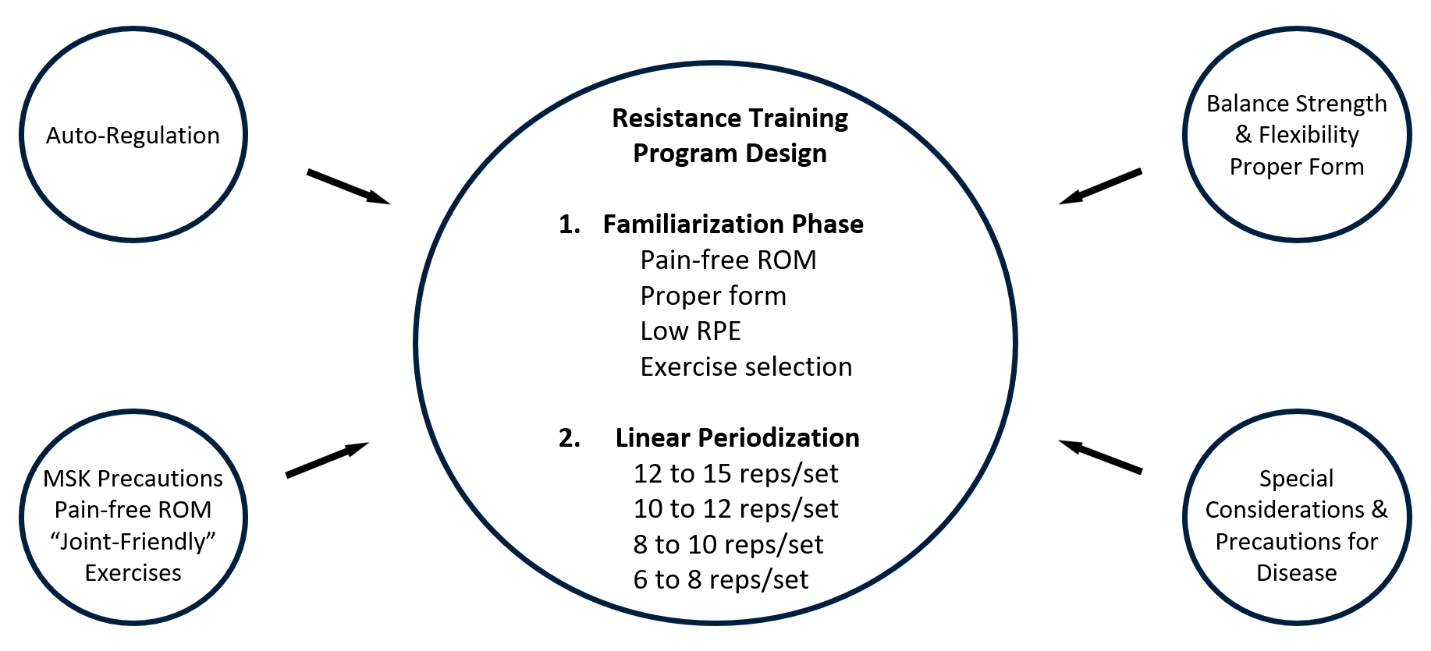
Source figure from Chapter 17.
Summary
This section bridges the theoretical foundations of the chapter with the practical implementation of universal exercise programming. It ties together the universal algorithm, core principles, and layered safety measures into a cohesive, accessible framework, reinforcing why this approach is revolutionary in medical fitness.
Section 3: Case Study: Comprehensive Application
To illustrate how the Best Practice Resistance Training Model and the universal themes can be applied across various contexts, consider the following case study and the sections that follow. This example demonstrates how a fitness professional can design an effective, safe, and adaptable program for a client with multiple conditions, all while adhering to the core principles outlined earlier.
Client Profile
Demographics: 59-year-old male, class II obesity (BMI 36), metabolic syndrome.
Medical Conditions: Hypertension, type 2 diabetes, knee osteoarthritis, and chronic low back pain.
Goals: Weight loss, improved mobility, reduced medication dependency.
Section 4: Application of the Universal Algorithm
1. Screen
Completed PAR-Q+ and intake form, revealing no contraindications to exercise. However, the exercise intake form revealed several critical insights: he is apprehensive about getting injured (having been previously injured while working with a fitness trainer), demonstrates low to moderate confidence, and prefers to focus on resistance training. Additionally, the intake form indicated a history of starting and stopping exercise programs, a pattern of hopping from one routine to the next without sustained adherence, and a reliance on sub-optimal strength fitness routines in the past that lacked progression or proper structure. These behavioral tendencies highlight the need for a program designed to build consistency and trust while addressing his confidence and safety concerns.
Key considerations: The client’s current medications (antihypertensives, metformin), a history of joint pain, low baseline strength fitness revealed during the assessment phase, and a behavioral tendency to start and stop exercise programs without sustained adherence. These factors emphasize the need for a consistent, structured approach to programming with gradual progression and built-in feedback mechanisms.
2. Assess
Aerobic Capacity: Performed a treadmill walking field test using RPE to establish baseline intensity (RPE 4 at 3.5 mph) and duration (15 minutes).
Strength and Movement: Bodyweight squats revealed limited depth due to knee pain; used 3-week Familiarization Phase to determine appropriate "toolbox" of exercises for each major muscle group (legs, back, chest, shoulders, core, hip abductors/adductors, calves).
Joint Mobility: Trigger point release and flexibility assessments identified tight quadriceps and hamstrings.
3. Initiate
Familiarization Phase (3 weeks):
Resistance training: Total-body sessions began with a frequency of 2x/week, progressing to 3x/week by week three. Repetitions were consistent at 10/set throughout the phase, while intensity increased gradually, starting at an RPE of 5 during week one and reaching the target of RPE 7 by week three to build confidence and establish a foundation for progression.
Aerobic exercise: Frequency started at 2x/week in week one and progressed to 3x/week by week three. Walking was chosen as the primary mode of exercise. Intensity was maintained at 3.5 mph, while session duration increased incrementally from 15 minutes in week one to 25 minutes by the end of the three-week phase, fostering gradual adaptation and confidence.
Flexibility and trigger point release: Daily sessions focused on quadriceps and hamstrings.
4. Progress
Periodized progression:
Resistance training: Began with a flexible, linear Periodized model. Intensity and load gradually increased across the 12 to 15, 10 to 12, 8 to 10, and 6 to 8 loading zones over a 12-week period (each phase was 3 weeks).
Aerobic exercise: Interval walking was introduced during the second 3-week phase of the Periodized program (4:1 work/recovery ratio). During the final 3-week phase, the work/recovery ratio was adjusted to 3:1 to increase intensity and challenge cardiovascular capacity further.
“Progress as tolerated”
As outlined in Chapter 1, "progress as tolerated" is a foundational principle that ensures safety and efficacy in exercise programming. Within the context of program design for individuals who present with multiple conditions, this concept becomes indispensable. For example, weekly check-ins can reveal trends in adherence or barriers such as fatigue or joint discomfort, prompting adjustments to volume, intensity, or exercise selection.
For a more comprehensive exploration of this principle and its broader applications, refer to Section 7 below, where "progress as tolerated" is discussed as a unified framework integrating safety, adaptation, and iterative refinement.
Refer to the chapters associated with the conditions in this case study to determine signs, symptoms, special considerations, precautions, and contraindications for each. If an exacerbation occurs, utilize the guidelines described in Chapter 1.
5. Feedback and Reflect
Weekly check-ins served as a valuable opportunity to gather subjective insights from the client, such as reductions in joint pain, increased energy levels, improved sleep quality, and heightened motivation. These discussions also highlighted any challenges or barriers the client faced, such as balancing exercise with daily life or addressing lingering apprehensions about injury. Additionally, the check-ins reinforced accountability and provided an avenue for emotional support.
Training logs were meticulously maintained to track objective performance metrics. These logs documented key progressions such as increased walking duration (from 15 to 25 minutes over the initial weeks), higher squat depth (achieving pain-free movement), improved load capacity during resistance training, and more consistent adherence to the program. The logs also recorded metrics like weekly frequency, RPE ratings, and recovery observations, offering a comprehensive view of the client’s progress.
6. Improve
Adjusted the program based on client feedback, introducing lunges into the routine to enhance strength, stability, balance, and mobility. This marked a significant milestone in the client’s progress—the ability to perform lunges not only improved his lower-body strength but also increased his capacity to get up and down from the floor with ease. This achievement had profound implications for his quality of life, enabling him to engage more actively with his grandchildren and participate more fully in daily activities with less physical strain.
Periodization, by its nature, played a critical role in these improvements. The iterative and cyclical structure of periodization naturally drives enhancements in fitness adaptations such as conditioning, strength, power, and mobility. As the client progressed through the program, the planned variations in intensity and load provided consistent challenges, ensuring continuous improvement. This structured approach also fostered intrinsic motivation, as the client could clearly observe and measure his advancements in performance and overall fitness. Seeing tangible results reinforced adherence to the program and sustained his commitment to long-term health.
The "Improve" phase of the Universal Algorithm encapsulates both deliberate adjustments made to the program and the organic improvements inherent in a well-designed periodized model. While small changes—such as introducing lunges or refining exercise intensity—address immediate client needs, the broader framework of periodization ensures ongoing progress. This approach, often mistakenly viewed as exclusive to competitive athletes, is in fact a practical, commonsense strategy applicable to everyone. Periodization provides a roadmap to optimize program structure, plan for future goals, and sustain long-term performance improvements, underscoring its universal relevance and value.
Case Study Phase Progression
| Phase | Duration | Resistance Training | Aerobic Training |
|---|---|---|---|
| Familiarization | 3 weeks | 2x/week, 10 reps, RPE 4-6 | 3x/week, 20 min, | RPE 3-4 |
| Conditioning and Local Muscle Endurance | 4 weeks | 3x/week, 12-15 reps, RPE 6-7 | 4x/week, 30 min, | RPE 4-5 |
| Transition (to Strength and Power) Phase | 4 weeks | 3x/week, 10-12 reps, RPE 7-8 | 4x/week, added interval walking 1x/week |
| Transition (to Strength and Power) Phase | 4 weeks | 3x/week, 8-10 reps, | RPE 7-9 | 4x/week, included interval walking 1x/week |
| Strength and Power Phase | 4 weeks | 3x/week, 6-8 reps, | RPE 7-9 | 4x/week, included interval walking 1x/week |
This case study highlights the adaptability and simplicity of the Best Practice Resistance Training Model. Despite the complexity of managing multiple medical and musculoskeletal conditions, the universal framework allowed the fitness professional to create a comprehensive and scalable program, underscoring the model’s versatility.
As we’ve seen in the case study, exercise programming is a cornerstone of health improvement. Yet, the broader integration of lifestyle medicine principles further enhances these outcomes, creating a truly holistic framework.
How the Case Study Demonstrates Key Themes
The case study exemplifies how the principles of universal programming, integrated algorithms, and lifestyle medicine create a cohesive framework for managing complex client needs.
Universal Algorithm: The case study showcases the six-step process (Screen, Assess, Initiate, Progress, Feedback, Improve) in action. For example, the client's apprehensions and health history are addressed during the screening and assessment phases, ensuring a tailored and safe program. Progression follows structured periodization, emphasizing the adaptability of this universal model.
Unified Framework: The simplicity of the Best Practice Resistance Training Model is evident in its application to the client's multiple conditions. Rather than designing condition-specific programs, the framework incorporates universal safety precautions (e.g., pain-free ranges of motion, RPE-based intensity adjustments) to create an effective, scalable plan.
Lifestyle Medicine Integration: Alongside the periodized exercise program, the client embraced key pillars of lifestyle medicine to drive meaningful improvements in overall health. By adopting a nutrient-dense diet focused on whole, unprocessed foods, the client improved energy levels and metabolic health. A consistent sleep schedule, prioritizing 7-8 hours of high-quality sleep per night, supported physical recovery and mental well-being. Additionally, the physical and psychological benefits of the program improved the client’s self-confidence, leading to strengthened social connections and a renewed sense of purpose. These synergistic lifestyle changes complemented the exercise regimen, creating a holistic framework for sustainable health.
Periodization as a Cornerstone: The program uses periodized resistance training to guide the client through phases of conditioning, strength, and power, ensuring steady progress. The iterative structure allows the program to evolve based on the client’s readiness, demonstrating the scalability and universality of periodization.
Progress as Tolerated: The client's progress is consistently monitored through weekly check-ins, emphasizing subjective and objective feedback to adjust program intensity and volume. This ensures safety and aligns with their physical and psychological readiness.
Practical and Scalable Solutions: The case study underscores the practicality of the universal approach by addressing multiple conditions (e.g., metabolic syndrome, hypertension, knee osteoarthritis) without deviating from core principles. This highlights the framework’s adaptability to diverse populations and its potential for broader healthcare integration.
Section 5: Integrating Lifestyle Medicine
Six Pillars of Lifestyle Medicine
Physical Activity & Progressive Exercise: A core component and subset of lifestyle medicine.
Nutrition: Focused on reducing processed foods and increasing whole, nutrient-dense options.
Restorative Sleep and Recovery: Promoting consistent, high-quality sleep to optimize physical and mental recovery. Recovery strategies also include incorporating lighter-intensity sessions, active rest days, and planned deload periods into the program. These elements are essential for balancing physical stress, preventing overtraining, and ensuring long-term adherence and progress.
Stress Management: Including mindfulness techniques to support adherence.
Social Connections: Social connection encompasses multiple layers of support, including the guidance and encouragement offered by the fitness professional, the involvement of family, friends, and co-workers, and engagement with online support groups such as those created by the MRF Institute. These connections are instrumental in sustaining engagement, fostering a sense of accountability, and building a supportive community that enhances adherence and motivation.
Avoidance of Risky Substances: Educating on smoking cessation and alcohol moderation.
Section 6: Periodization as the Cornerstone
Inherent Strength of Periodization
Iterative Improvement: Built-in cycles for continuous progression.
SMART Goals: Time-bound goals embedded within the structure of periodized programs.
Psychological Engagement: Regular feedback and visible improvements maintain motivation.
Visual Representation
Periodization Cycle / Goal
| Periodization Cycle | Goal |
|---|---|
| Phase 1: Conditioning | Build work capacity and overall conditioning with lighter loads and moderate to high reps |
| Phase 2: Build the bridge between conditioning & strength | Begin increasing strength with moderate loads and moderate reps |
| Phase 3: Begin to optimize strength | Begin to optimize strength with moderate to heavy loads and lower reps |
Section 7: Progress as Tolerated: A Unified Framework
As outlined in Chapter 1, "progress as tolerated" is a foundational principle that ensures safety and efficacy in exercise programming. Within the context of synthesizing program design across diverse populations, this concept becomes indispensable.
Key Considerations for Integration
Holistic Adaptation: Progression is aligned with the individual's physical and psychological readiness by using tools such as subjective feedback, readiness assessments, and real-time adjustments to training variables. For instance, a client reporting high fatigue levels may benefit from reduced session intensity or additional recovery time.
Inverse Relationship Between Fitness and Flare-Ups: Stronger, more conditioned individuals experience fewer and less severe setbacks. For example, gradual improvements in strength and aerobic capacity can help a client with chronic joint pain better tolerate physical activity and recover more efficiently from flare-ups.
Lifestyle Integration: Broader lifestyle factors such as consistent, restorative sleep, nutrient-dense diets, and stress management techniques are actively incorporated into the program. For instance, clients are encouraged to set regular sleep schedules and adopt mindfulness practices to optimize recovery and reduce systemic stress.
Iterative Refinement: Feedback loops are employed to adjust program variables dynamically. Weekly progress reviews allow trainers to identify barriers such as discomfort or motivation dips and implement tailored solutions, ensuring both progress and safety.
This framework ties into the universal algorithm presented in Chapter 17, reinforcing its role as a bridge between theory and practice.
Final Takeaways
The journey through this chapter highlights how adherence, periodization, and the universal algorithm intersect to form a comprehensive approach to fitness programming. Section 1 emphasized the critical role of habit formation, rooted in structured periodization, to build a foundation of consistency and motivation. Section 2 expanded on these ideas, demonstrating how universal principles streamline program design while addressing the diverse needs of clients, from the general population to those with complex medical conditions.
Together, these sections illustrate the unifying philosophy of this book: that effective exercise programming is grounded in universal principles that are adaptable to any context. By combining these principles with a focus on adherence and individual readiness, fitness professionals can guide clients toward sustainable, lifelong improvements in health and fitness.
This chapter—and the book as a whole—calls for a shift in perspective: a rejection of overly complex, condition-specific models in favor of a unified approach that simplifies complexity while honoring individuality. By embracing the universal algorithm, periodization, and habit formation, fitness professionals are equipped to empower clients, bridge the gap between medicine and fitness, and foster meaningful, lasting change.